I have sat through more than 10,000 sales pitches in my career.
Coached them. Torn them apart. Rebuilt them from scratch.
And the single biggest pattern I see — across founders, sales teams, bid professionals, everyone — is this: the pitch fails before the call even starts.
Not because the product is weak. Not because the market is wrong. Because the person picking up the phone has not done the work that actually matters.
Here are the six things I now drill into every client before they get anywhere near a prospect:
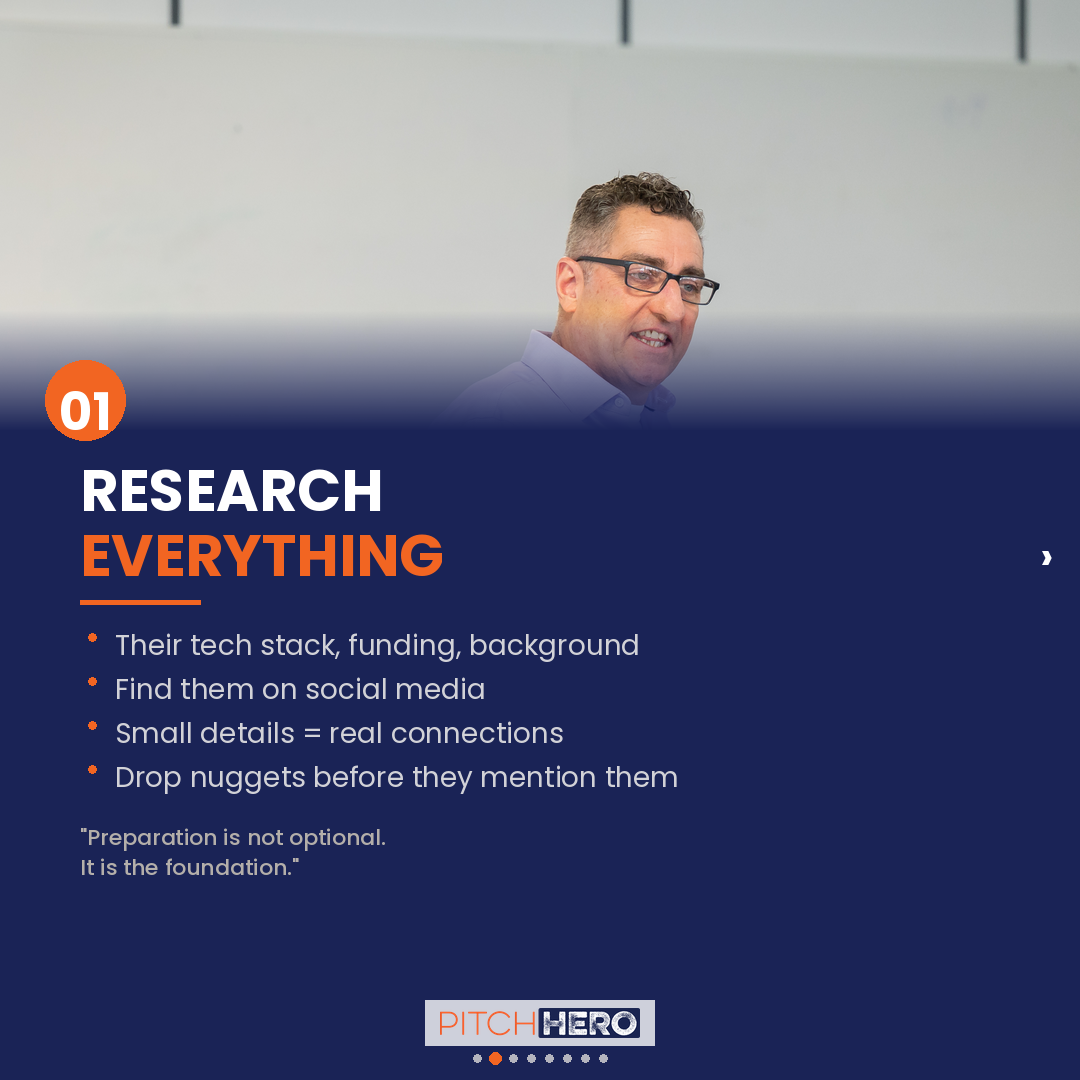
- Research everything.
Their tech stack. Their recent funding round. Where the decision-maker went to university. I have watched small details create real connections in the first ninety seconds of a call — and I have watched brilliant pitches die because the founder could not be bothered to spend ten minutes on LinkedIn beforehand.
Find their personal interests. Look at their social media. Check their club memberships. Did they take a golf trip last month? A family holiday to Disney? These are not trivial details. They are the difference between rapport and rejection.
Preparation is not optional. It is the foundation.
- Keep outreach short and direct.
I still see founders sending four-paragraph emails explaining how “robust and scalable” their system is. Nobody reads them.
The outreach that works is under 100 words. Straight to the pain point. Packed with proof.
“Hi [Name], saw you are struggling with [specific problem]. We helped [similar company] reduce this by 43% in six weeks. Got 15 minutes to see if we can do the same for you?”
That is it. I know how proud you are of the code you wrote. Nobody cares. Keep it short.

- Let the conversation flow.
The best salespeople I have ever coached share one trait: they listen more than they talk.
Sure, keep your key points in mind. But the real progress happens when you let the other person guide the direction. Talk about their problems first. If you do not know their problems, make an educated guess. Show them you understand what keeps them up at night — and the solution will present itself naturally.
I always recommend one question that never fails: “If you had a magic wand, which problems would you wish away?”
Then be quiet. Let them answer. That answer is your entire pitch strategy.
Smart founders also know which objections are coming — budget, timing, internal red tape — and they have thought about the response before the prospect even raises it.
- Stop lying on sales calls.
This is the one that makes people uncomfortable when I say it in a coaching session.
Just say: “That feature is not on our roadmap.”
It takes courage. But I have seen it build more trust in thirty seconds than an hour of feature demos.
Do not answer every “Can it do X?” with “Of course. It is on our roadmap.” You are not learning anything. All you are doing is blurring what you actually offer — and becoming indistinguishable from hundreds of companies vaguely promising the same things.
The founders who stand out are the ones willing to say no. That honesty is rare. And prospects remember it.
- Lock down the next step.
Before you dial, know what you want from the call. A demo. A meeting with the decision-maker. A signed proposal.
Never — and I mean never — end a conversation without agreeing on what happens next. Send the documents. Schedule the follow-up. Confirm the demo. Lock it down before saying goodbye.
This is not complicated. It is not clever. But I have watched more deals die from a vague “let us circle back next week” than from any pricing objection.
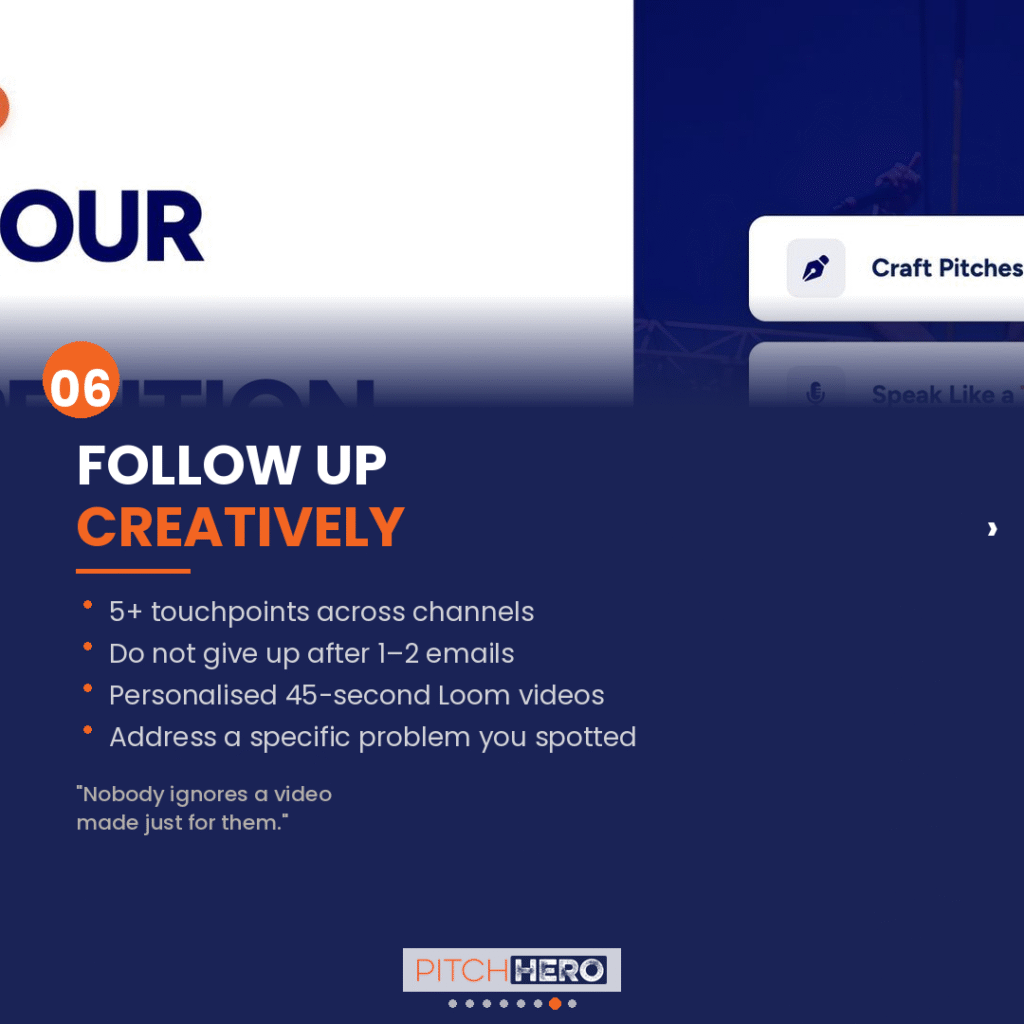
- Follow up creatively.
Most founders give up after one or two emails. That is exactly where the opportunity begins.
The clients I work with follow up five or more times, across different channels. Consistent without being desperate.
The approach that changed everything for several of my clients: personalised 45-second Loom videos addressing a specific problem spotted on the prospect’s website or LinkedIn. Nobody ignores a video made just for them.
It all comes down to three things: preparation before the call, genuine connection during it, and discipline after it ends.
Do not sell. Listen. Get on the same side of the table as your prospect.
I have spent 25 years coaching people through exactly this — turning nervous, unfocused pitches into clear, compelling conversations that close. If your team keeps getting into the room but losing the deal, the problem is almost certainly not your product. It is your delivery!
JOIN FREE WEBINAR: Register here
https://docs.google.com/forms/d/1-bhy_xPIhjO3htgkK1DPgK3VslyqmNTlz4jWngarWgo/edit